
CLICK TO CALL NOW 877-217-7020
EPA ID #: FLD984167080
 Click here to get fill out a quick form so we can contact you with more information
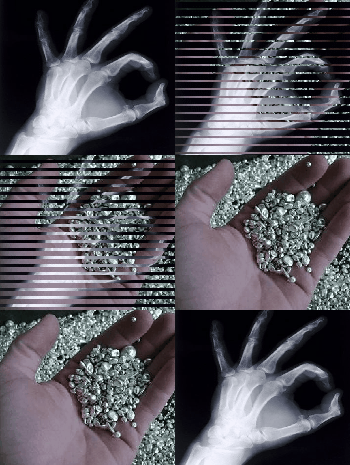
X-Ray film recycling services - We pick-up X-rays nationwide for FREE.
We pick-up your outdated / end of life X-Ray and MRI film anywhere in the US for silver recovery purposes.
Our X-Ray recycling program includes a free pick-up and cash back for your
X-ray films, we pay by the LB.
We also provide a HIPAA compliant certificate of
destruction for your film including paper jackets and all other medical
related records we receive along with it, B.W. Recycling is licensed and
registered with the Environmental Protection Agency,
the process is 100% eco-friendly.
How does it work?
You contact us, we pick-up the film for free and provide you with a certificate of destruction and a
check for each lb of your film.
Click here for our quick schedule pick-up form
We highly recommend reading our frequently asked questions page to learn more about our X-ray recycling program. You can also call anytime and speak to one of our representatives for more information.
A little more about the X-Ray recycling process:
If your film are received in the paper jackets (envelopes) we will first remove all of the
films out of the jackets, the jackets will be recycled as well, then all of the films out of jackets will be chemically washed and the silver will be recovered, the left over which
is a clear PET plastic will be recycled as well, all sensitive information will
be destroyed permanently both on the films and the jackets.
Learn more about our silver recovery process
How long do I have to keep the X-ray films before I can dispose of it?
HIPAA did not state the period of time any medical records should be kept prior
to disposal, it is very common to keep the records for 7 years, however each
state has its own rules for medical records retention period.
Click here to view the required period for x-ray film retention in your state.
Concerned about doing the right thing with your X-Rays, you should!
Your X-Ray film contains sensitive information of your patients and it is
your responsibility to protect it. When the time comes for purging and disposal
it will not be wise to handle your patients x-ray films to any
recycler that offers the highest reimbursement per lb for the silver recovered,
there is a lot more to x-ray film disposal than a little bit more money.
Find out why you should choose B.W. Recycling for disposing your x-ray film properly.
Types of x-ray film recycled.
We recycle all kinds of X-Rays, such as medical X-Rays, MRI, Dental, vets, NDT
film, industrial film, lithographic and most kinds of other radiology photography.
Click
here for a detailed list of recyclable film.
Quick facts about silver recovery:
The demand for silver is rising. Alaska continued as the countrys leading silver-producing. Silver refiners estimate a total output of 3,000 tons from domestic and foreign ores and concentrates, and from old and new scrap.
- In 2007, approximately 1,600 tons of silver was recovered from old scrap X-Ray film.
- Approximately one-fifth of the silver used each year worldwide ends up in radiology film.
We speak Spanish, Reciclado de placas radiográficas
|
Licensed and certified silver recyclers. EPA ID #: FLD984167080 |
|
|


If you have X-Ray film for recycling and you would like a paid per lb price quote or more information, please fill out this quick form and we will contact you shortly. Your information will be used for your inquiry purposes only. Read our privacy policy |
|
Dallas - Tampa - Atlanta - Memphis - Fresno - Miami - Raleigh - Saint Paul |
bsd
Copyright B.W. Recycling, Inc (BWR), 2023. All Rights Reserved.
Site maintained by Inspire Sites